Showing posts with label Management. Show all posts

Tuesday, July 8, 2025

Leading With People

Leading With People isn’t your typical leadership book. It doesn’t throw buzzwords at you or promise overnight transformation. Instead, it invites you into the quiet, courageous, and often uncomfortable truth about what it means to lead—not from a podium, but from the heart. This book is about presence over power, connection over control, and listening over lecturing. It’s a call to show up as a person before you show up as a leader. 
Reading it felt like being gently but firmly reminded that titles mean nothing if people don’t feel seen, safe, and supported in your presence. It’s not about leading perfectly—it’s about leading personally, and with purpose. Here are 8 lessons that moved me and changed how I think about influence, empathy, and impact.

8 Lessons I Learned from Leading With People:
  
1. People don't follow titles—they follow trust.  
You can have authority on paper, but if people don’t feel you genuinely care about them, they won’t be moved by you. Real leadership is earned through consistency, humility, and connection.

2. Listening is leadership.  
Not the kind of listening that waits for its turn to talk, but the kind that leans in without an agenda. When people feel truly heard, they give you their best—not just their compliance, but their creativity.

3. Vulnerability builds bridges.  
Letting people see your humanity doesn’t make you weak—it makes you real. People are more likely to trust a leader who admits mistakes than one who pretends to have all the answers.

4. Empathy isn’t soft—it’s strategic.  
Understanding what your people are going through isn’t just kind—it’s wise. Empathy helps you lead in a way that aligns with people’s needs, motivations, and emotional realities.

5. The best leaders create space, not pressure. 
They foster environments where people feel safe to speak up, take risks, and be fully themselves. Leadership is about cultivating conditions where others can thrive, not just survive.

6. Your presence is your power.  
It’s not always what you say—it’s how you *show up. Are you rushed, distracted, reactive? Or are you grounded, present, and responsive? People don’t forget how a leader made them feel.

7. Leading others starts with leading yourself.  
You can’t pour from an empty cup. Self-awareness, emotional regulation, and personal integrity aren’t just “nice to have”—they’re essential leadership tools.

8. People are not problems to be solved—they are partners to be understood.  
Leadership isn’t about fixing people—it’s about walking alongside them. Every person you lead has a story, a strength, and a struggle. Great leaders take time to see all three.

Leading With People reminded me that leadership is a human art before it is a business skill. If we want to build lasting influence, we don’t need more control—we need more compassion. And it starts, always, with choosing people over ego.

Saturday, April 6, 2024

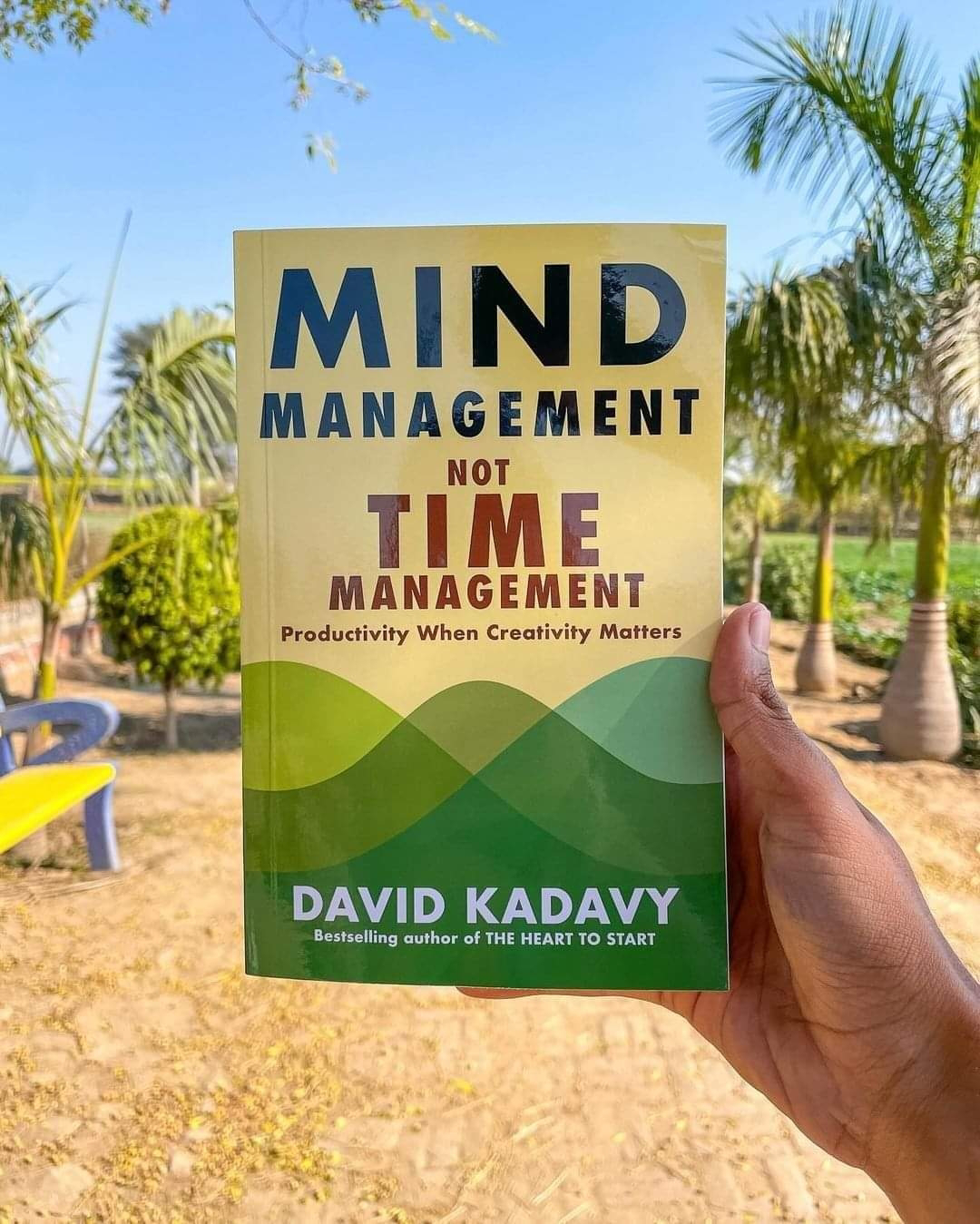
Mind Management Not Time Management

The book "Mind Management Not Time Management" by David Kadavy offers valuable lessons on how to improve productivity and manage one's time more effectively.

Here are some key takeaways from the book:

1. Prioritize your tasks: Kadavy emphasizes the importance of setting priorities. It's crucial to know which tasks are most important and will have the greatest impact on your goals. By focusing on high-priority tasks first, you can ensure that your time and energy are allocated efficiently.

2. Avoid multitasking: Contrary to popular belief, multitasking can be less productive and more draining. Kadavy suggests focusing on one task at a time and giving it your full attention. This allows for deeper engagement and better results.

3. Embrace deep work: Deep work refers to periods of uninterrupted, concentrated work. The author stresses the significance of creating dedicated blocks of time for deep work, during which distractions are minimized. These focused sessions can lead to higher-quality output and increased productivity.

4. Manage distractions: To improve time management, it is necessary to identify and manage distractions effectively. Kadavy advises developing strategies to minimize interruptions, such as turning off unnecessary notifications, setting aside specific time for email and social media, and creating a conducive environment for concentration.

5. Leverage your energy cycles: Understanding your individual energy cycles is crucial for optimizing productivity. Kadavy suggests identifying your peak energy periods and scheduling demanding or creative tasks during those times. Conversely, less demanding activities can be planned for lower-energy periods.

6. Cultivate a growth mindset: Developing a growth mindset enables you to approach challenges and setbacks as opportunities to learn and grow. Kadavy emphasizes the importance of reframing failures and setbacks positively and using them as stepping stones for improvement rather than feeling discouraged or defeated.

7. Take breaks and rest: Rest and rejuvenation play a vital role in maintaining productivity and well-being. The author advises incorporating regular breaks into your work routine, allowing your mind to recharge and preventing burnout.

8. Set realistic goals: Setting achievable and realistic goals is essential for effective time management. Kadavy emphasizes the importance of breaking down larger goals into smaller, actionable steps to ensure progress and prevent overwhelm.

9. Cultivate self-awareness: Developing self-awareness allows you to understand your habits, strengths, weaknesses, and patterns of behavior. This knowledge can help you identify areas for improvement and implement strategies to enhance productivity and time management.

10. Embrace simplicity and minimalism: Simplifying your workflow and removing unnecessary clutter from your life can lead to increased efficiency and focus. Kadavy encourages decluttering both physical and digital spaces, reducing commitments and distractions, and adopting a minimalist mindset.

"Mind Management Not Time Management" offers valuable insights and practical techniques to enhance productivity, manage time effectively, and cultivate a more mindful approach to work and life.

Book: https://amzn.to/3xaeTJi

You can get the audiobook for FREE by using the same link above when you register on the Audible platform.