Showing posts with label philosophy. Show all posts

Saturday, July 12, 2025

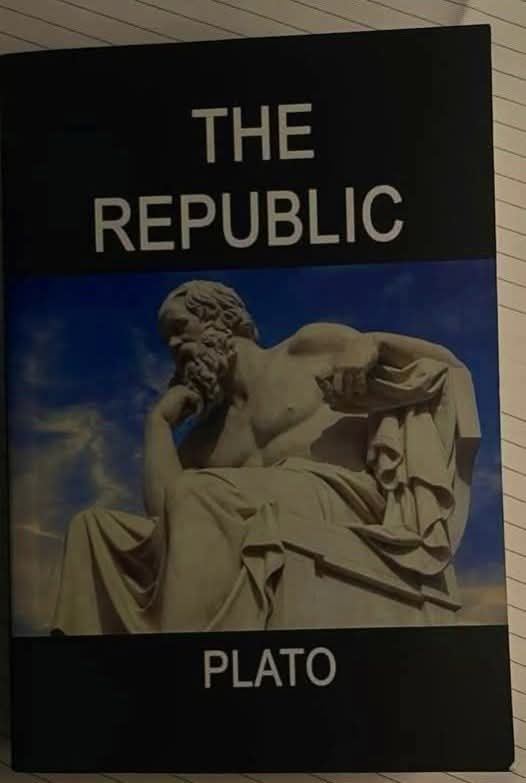
The Republic by Plato

There are books that speak plainly, others that argue, and then there are books that echo. The Republic by Plato does more than echo, it rings like a bell through the centuries, with each generation hearing its own questions and worries in the sound. To read it is to converse with one of the greatest minds to ever walk the earth. But more than that, it is to sit in a timeless court where the soul is on trial, where justice is not merely debated, but stripped naked, examined, reassembled, and exalted.

At first glance, it is a dialogue about justice. But justice here is not limited to law or punishment; Plato is after something deeper. What is justice in a person? In a society? How do we structure a life, or a state, that honors the good, the noble, the true? Socrates, Plato’s enduring voice and hero, pulls us along with questions, always questions: unrelenting, precise, frustrating in their clarity. And through this relentless questioning, the reader begins to sense a shift within: a quiet invitation to doubt what we thought we knew.

What makes this book so enduring is not that it gives answers, but that it forces the reader to confront their own assumptions. As Socrates debates with Glaucon, Adeimantus, and others, the city-state they build: the kallipolis becomes a mirror. Every structure, every class, every policy is built with a purpose: to reflect a well-ordered soul. The city is not just a metaphor. It is a map of the inner world. Plato is, quite literally, designing a republic inside you.

In this imagined city, people are divided into producers, auxiliaries, and guardians. The rulers, philosopher-kings, are chosen not for wealth or popularity, but for wisdom, discipline, and their capacity to love the truth. It is here that Plato makes one of his most provocative claims, that only philosophers, those who see beyond appearances, who love the Form of the Good, should rule. To the modern ear, this may sound elitist. But what Plato offers is not tyranny by scholars, but governance by those least likely to be corrupted by power.

Perhaps the most haunting section is the Allegory of the Cave, a philosophical parable that feels more like poetry. It speaks to anyone who has ever struggled to free themselves from ignorance or confronted uncomfortable truths. We are the prisoners, Plato says, chained to the wall, mistaking shadows for reality. The philosopher is the one who breaks free, sees the sun, and returns to rescue others. But the tragedy? The prisoners may kill him for it. This single allegory is enough to make The Republic worth reading.

But Plato does not just speak to the mind, he stirs the conscience. He warns of what happens when society prizes appearance over substance, pleasure over discipline, or individual desire over communal good. Democracies, he says, can decay into chaos if freedom is misunderstood as the right to indulge every whim. Tyrannies are born not from strength, but from the collapse of self-control. These warnings feel eerily modern. Our politics, media, and even personal lives often mirror the decline Plato describes.

And yet, despite its austere architecture, The Republic holds surprising tenderness. It touches on music, on education, on the role of women, even on the immortality of the soul. Plato insists that the soul’s health matters more than wealth or pleasure. He likens the unjust person to a city at war with itself: noisy, divided, exhausted. The just person, however, is like a well-tuned instrument: harmonious, steady, at peace. Is that not what we all seek? Not just to do right, but to be right, inwardly ordered, grounded in meaning?

As the dialogue winds down, Plato offers the Myth of Er, a strange tale of souls choosing their next lives after death. It feels mythological, yes, but also deeply psychological. The choices we make today, Plato suggests, echo beyond death. We shape our souls with every act of justice or injustice. Even now, in a world obsessed with speed and surface, that message lands with quiet power: you are crafting who you are becoming.

For all its seriousness, The Republic is not a cold book. It is rigorous, yes, but it burns with longing: for wisdom, for order, for a life that is not wasted. There is beauty in its ambition. Plato is not content to describe the world. He dares to reimagine it. And in doing so, he asks us to do the same.

There is no denying that the text can be dense. It requires patience, especially for readers new to philosophy. But the rewards are immense. You emerge from it changed, like someone who has traveled through a difficult country only to find themselves stronger, clearer, and strangely more whole.

It is not a book to be read once. It is a companion for life, one you return to at different seasons, hearing new wisdom each time. It challenges, yes. It even offends. But it also heals, confronts, and uplifts. It demands that you think not just about what kind of world you want to live in, but what kind of soul you want to inhabit.

To read The Republic is to face yourself. It is to sit in judgment not of others, but of your own integrity. And in that judgment, to find a quiet call toward betterment, toward justice not as law, but as harmony between what you know, what you believe, and how you live.

In our fractured world, full of distractions and dissonance, this book reminds us that clarity is possible. That justice is not dead. That philosophy, when rightly practiced, is not distant or dry, but deeply human.

Plato’s The Republic may have been written over two thousand years ago, but its questions are still ours. It is not just a work of philosophy. It is a work of the heart. Read it not to agree, but to awaken. And once awakened, let it disturb you, humble you, and draw you closer to the life that is truly worth living.

Saturday, July 5, 2025

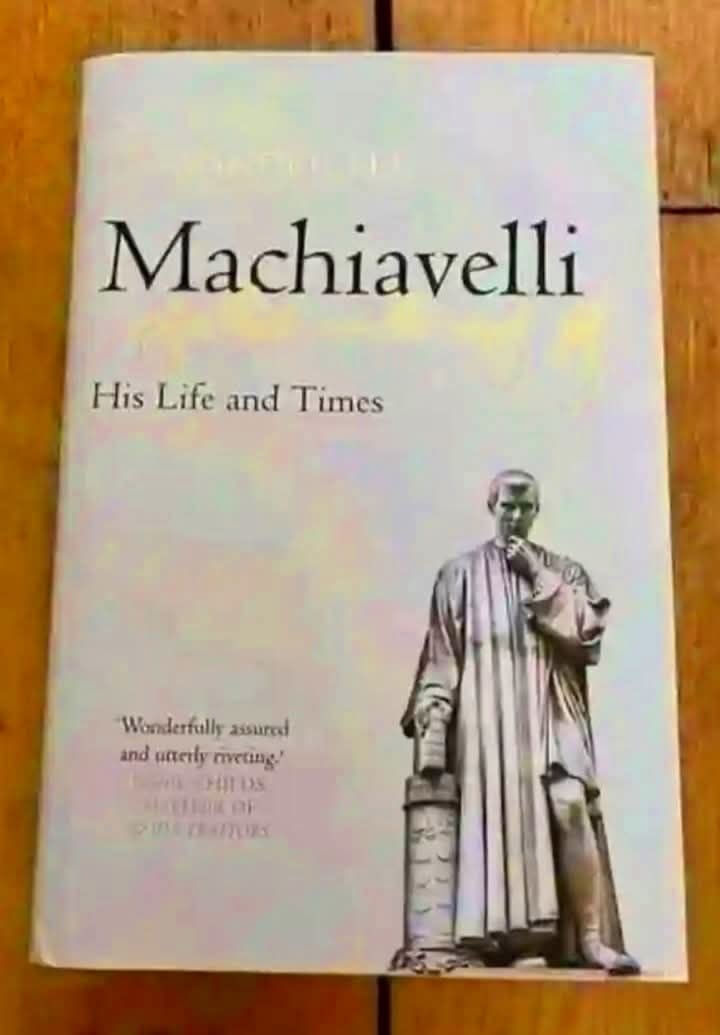
Machiavelli: The Life, Times and Ideas

In "Machiavelli," Alexander Lee provides a comprehensive exploration of the life, times, and ideas of one of history's most influential political thinkers, Niccolò Machiavelli. Through a detailed examination of Machiavelli's works and his historical context, Lee sheds light on the enduring relevance of Machiavelli's insights into power, politics, and human nature. 

Here are 8 key lessons that stand out as you engage with this thought-provoking narrative.

1. Understanding Human Nature: Lee emphasizes that Machiavelli believed in the fundamental complexity of human nature. He argues that people are often driven by self-interest, fear, and desire. This insight encourages you to recognize the motivations behind people's actions, particularly in political and social contexts, highlighting the need for a realistic understanding of human behavior.

2. The Role of Power: The book underscores Machiavelli’s focus on power dynamics and the necessity of understanding how power operates. Lee explains that political leaders must be adept at navigating power struggles to maintain authority and achieve their goals. This lesson inspires you to reflect on the nature of power in your own life and the importance of strategic thinking in leadership.

3. The Importance of Pragmatism: Lee highlights Machiavelli’s emphasis on pragmatism over idealism. Machiavelli advocates for a realistic approach to governance, prioritizing effective strategies over moral considerations when necessary. This insight encourages you to consider the balance between your ideals and the practicalities of achieving your goals.

4. The Use of Fear and Love: Machiavelli famously stated that it is better for a ruler to be feared than loved, but ideally to be both. Lee discusses the delicate balance between fear and love in leadership. This lesson motivates you to think about how you can cultivate respect and loyalty without resorting to tyranny.

5. Adaptability in Leadership: The book emphasizes Machiavelli's belief in the need for leaders to be adaptable and flexible in response to changing circumstances. Lee illustrates that successful leaders must be willing to alter their strategies based on the context. This insight inspires you to embrace adaptability in your own leadership approach, recognizing that rigidity can lead to failure.

6. The Significance of Reputation: Lee discusses the importance of reputation in Machiavelli's political philosophy. A leader's image can significantly impact their authority and effectiveness. This lesson encourages you to be mindful of how you are perceived by others and to cultivate a reputation that aligns with your values and goals.

7. The Role of Fortune: Machiavelli introduces the concept of fortune, which he perceives as a force that influences human affairs. Lee explains that while you cannot control fortune, you can prepare for it through wise decision-making and strategic planning. This insight motivates you to recognize the interplay between chance and agency in your life.

8. The Need for Strong Institutions: The book underscores Machiavelli’s belief in the importance of strong institutions as a foundation for stable governance. Lee emphasizes that effective political systems rely on established laws and structures. This lesson inspires you to appreciate the role of institutions in promoting order and stability in society.

"Machiavelli" by Alexander Lee offers a rich exploration of Niccolò Machiavelli's life, ideas, and the historical backdrop against which he wrote. Each lesson encourages you to reflect on the complexities of power, human nature, and leadership.

Thursday, June 5, 2025

The Power of Writing It Down: A Simple Habit to Unlock Your Brain and Reimagine Your Life

"The Power of Writing It Down: A Simple Habit to Unlock Your Brain and Reimagine Your Life" by Allison Fallon is an inspiring guide that emphasizes the transformative power of writing as a tool for self-discovery and personal growth. Fallon draws from her own experiences and the stories of others to illustrate how the act of writing can help individuals process their thoughts, clarify their emotions, and unlock their potential.
In the book, Fallon presents writing not merely as a creative outlet but as a practical habit that can lead to significant changes in one’s life. She offers actionable strategies and prompts to encourage readers to engage in regular writing practices, whether through journaling, free writing, or structured exercises. Fallon highlights how writing can serve as a means of introspection, helping individuals to confront their fears, dreams, and desires.
Through her compassionate approach, Fallon aims to empower readers to embrace their stories and cultivate a deeper understanding of themselves. "The Power of Writing It Down" serves as a practical roadmap for anyone seeking to harness the therapeutic benefits of writing and to reimagine their lives through the written word.

10 Key Lessons

1. Writing as a Tool for Clarity: Utilize writing to gain clarity on your thoughts and emotions; putting pen to paper can help you understand your feelings more deeply.

2. Embrace the Process: Recognize that writing is a journey; the act of writing itself can lead to self-discovery, regardless of the outcome.

3. Regular Practice is Key: Establish a consistent writing habit; regular writing fosters creativity and allows for continuous personal reflection.

4. Confront Your Fears: Use writing to explore and confront your fears; articulating your fears on paper can reduce their power over you.

5. Document Your Dreams: Write down your goals and aspirations; putting your dreams into words makes them more tangible and achievable.

6. Celebrate Your Story: Acknowledge the importance of your personal narrative; embracing your story can empower you and foster self-acceptance.

7. Process Emotions Through Writing: Engage in writing to process difficult emotions; expressing your feelings can provide relief and clarity during challenging times.

8. Writing Prompts can Spark Creativity: Use writing prompts to inspire creativity; structured exercises can help overcome writer's block and ignite new ideas.

9. Reflect on Growth: Regularly review your writing to reflect on personal growth; tracking your thoughts over time can reveal patterns and insights.

10. Share Your Voice: Don’t be afraid to share your writing with others; expressing your voice can foster connection and inspire those around you.

"The Power of Writing It Down" illustrate the profound impact that writing can have on personal growth and self-awareness. Allison Fallon’s encouraging perspective empowers readers to embrace the act of writing as a means of unlocking their potential and reimagining their lives. The book serves as a valuable resource for anyone looking to explore their inner thoughts and create meaningful change through the written word.

GÊT BOOK: https://amzn.to/4jbegl3

You can ENJOY the AUDIOBOOK for FREE (When you register for Audible Membership Trial) using the same link above 👆👆

FOLLOW Elite Readers

Saturday, March 15, 2025

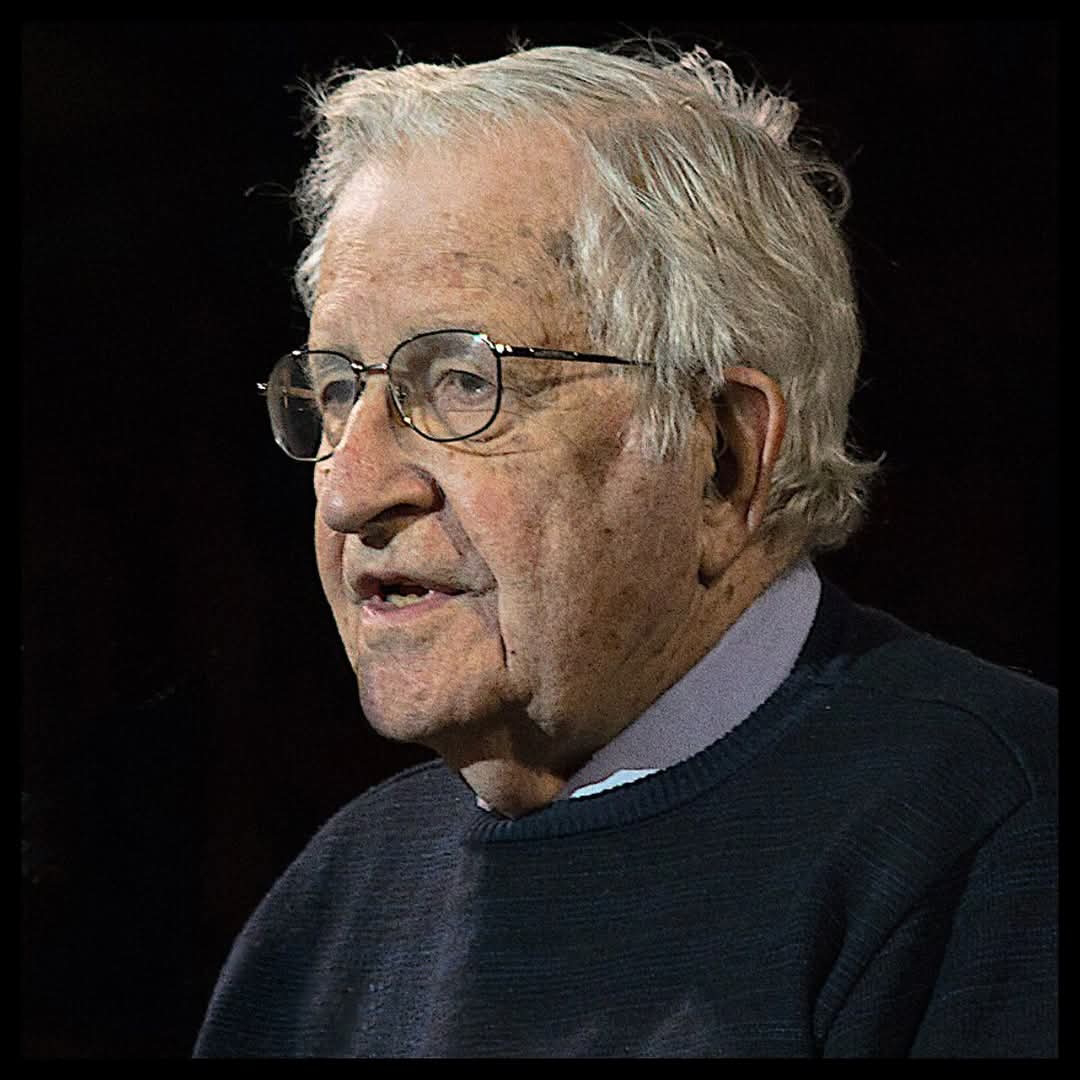
Noam Chomsky, a renowned American philosopher and professor

Noam Chomsky, a renowned American philosopher and professor, has been silenced at the age of 95. He has lost the ability to speak and write, leaving behind a legacy of powerful words that challenged the status quo. His insights, which exposed the injustices of global systems, will continue to resonate for generations to come. 

Here are some of his most impactful reflections: 

"There are no poor countries, only failed systems of resource management." 

"No one will place the truth in your mind; it is something you must discover for yourself." 

"The world is a mysterious and confusing place. If you are not willing to be confused, you become a mere replica of someone else’s mind."

"If you want to control a people, create an imaginary enemy that appears more dangerous than you, then present yourself as their savior." 

"There is a purpose behind distorting history to make it seem like only great men achieve significant things. It teaches people to believe they are powerless and must wait for a great man to act." 

"One of the clearest lessons of history: rights are not granted; they are taken by force." 

"To control people, make them believe they are responsible for their own misery and present yourself as their savior." 

"The West will one day regret its shallow ideas that alienate people from their true nature. One must seek the right religion and the right belief."

"The general population doesn't know what's happening, and it doesn't even know that it doesn't know.”

“How it is we have so much information, but know so little?”

“Hypocrites are those who apply to others the standards that they refuse to accept for themselves.”

#NoamChomsky #chomskyquotes #criticalthinking 
#historydistortion #challengingthestatusquo #wordsofwisdom #PoliticalActivist #SocialJustice

Saturday, August 24, 2024

Cheating is not only having sex with another person ...

Cheating is not only having sex with another person who is not your wife/husband, it also includes:

1. Receiving money from a man without the knowledge of your husband.

2. Giving money to a woman without the knowledge of your wife.

3. Sharing sex jokes with a person who is not your spouse.

4. Deleting messages which you dont want your spouse to read

5. Answering frequent calls at night from an opposite gender in the presence of your spouse.

6. Avoiding answering a call from someone when your spouse is around or stepping aside to answer that call.

7. Saving contacts of those other persons with different names so that your spouse fails to recognise.

8. Lying about your location to your spouse when you are with that other person or vice versa.

9. Having office husbands and wives.

10. Piling unresolved issues with your spouse is another highest type of cheating which will in turn ruin your body, soul and spirit.

Thursday, June 20, 2024

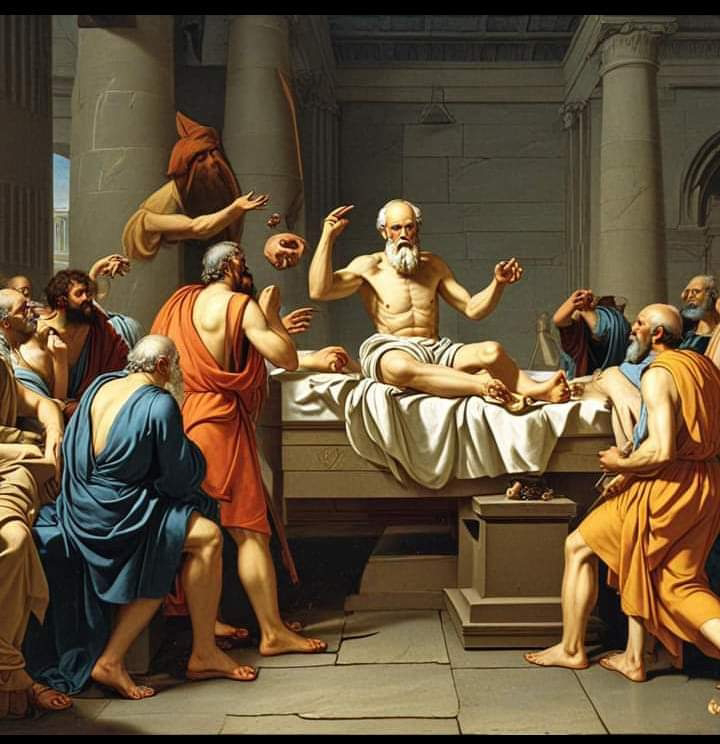
Trial and death of Socrates

The trial and death of Socrates, a pivotal event in Western philosophy, occurred in Athens in 399 BC. It marks a critical moment not only in Socrates' life but also in the history of philosophical inquiry, Athenian democracy, and the relationship between philosophy and society.

### Context

1. **Athenian Democracy**:
   - Socrates lived during the Golden Age of Athens, a period of cultural and intellectual flourishing. Athens was a democracy where citizens participated in decision-making through assemblies and courts.

2. **Socrates' Philosophy**:
   - Socrates was a philosopher who questioned conventional wisdom, seeking truth and ethical clarity through dialogue and the Socratic method (elenchus), a process of questioning assumptions and beliefs.

### Trial of Socrates

1. **Accusations**:
   - Socrates faced charges of impiety (not believing in the gods of the city) and corrupting the youth of Athens by encouraging them to question authority and traditional beliefs.
   - These accusations stemmed from Socrates' interactions with young Athenians and his critiques of Athenian politics and society.

2. **Legal Proceedings**:
   - The trial took place in the Athenian courts, with a jury of 500 citizens chosen by lot.
   - Socrates defended himself eloquently during his trial, as recorded by his disciple Plato in his dialogue "Apology."

3. **Verdict and Sentencing**:
   - Despite his defense, Socrates was found guilty by a narrow margin (around 280 to 220 votes).
   - When asked for an alternative punishment, Socrates suggested he should be rewarded for his service to Athens rather than punished. However, he was ultimately sentenced to death.

### Death of Socrates

1. **Execution**:
   - Socrates' death sentence was carried out by drinking a cup of poisonous hemlock (conium), a common method of execution in ancient Athens.
   - He calmly accepted his fate, refusing opportunities to escape and adhering to the laws of the city-state he had spent his life inquiring into and critiquing.

2. **Philosophical Legacy**:
   - Socrates' death became a symbol of intellectual integrity and the pursuit of truth, despite opposition from society and the state.
   - Plato's dialogues "Phaedo" and "Crito" recount Socrates' final conversations with his friends and disciples, discussing themes such as the immortality of the soul and the obligations of citizens to the state.

### Impact

1. **Philosophical Influence**:
   - Socrates' trial and death underscored the tension between individual conscience and societal norms, inspiring later philosophers to question authority and seek deeper understanding.
   - His legacy influenced the development of Western philosophy, ethics, and political thought, shaping figures like Plato and Aristotle.

2. **Political and Cultural Significance**:
   - The trial of Socrates highlighted the limits of Athenian democracy and the potential dangers of majority rule and populist sentiment.
   - It raised enduring questions about the role of dissent and intellectual freedom in democratic societies.

Thursday, March 14, 2024

DEATH OF KARL MARX London 14 March 1883 of bronchitis at age 64

DEATH OF KARL MARX London 14 March 1883 of bronchitis at age 64, one hundred and forty one years ago. Karl Marx has been described as one of the most influential philosophers in human history, and his work has been both highly lauded and heavily criticised. Two noteworthy critical philosophers were Karl Popper and Bertrand Russell. 

Russell's critique of Marx citations —

“My objections to Marx are of two sorts: one, that he was muddleheaded; and the other, that his thinking was almost entirely inspired by hatred, poverty, and strife. I have always disagreed with Marx. But my objections to modern Communism go deeper than my objections to Marx. It is the abandonment of democracy that I find particularly disastrous. A minority resting its powers upon the activities of secret police is bound to be cruel, oppressive and obscuarantist. His belief that there is a cosmic force called Dialectical Materialism which governs human history independently of human volitions, is mere mythology. His theoretical errors, however, would not have mattered so much but for the fact that, like Tertullian and Carlyle, his chief desire was to see his enemies punished, and he cared little what happened to his friends in the process. Marx's doctrine was bad enough, but the developments which it underwent under Lenin and Stalin made it much worse.“

— Bertrand Russell, Why I am Not a Communist from Portraits from Memory published in 1956

“Karl Marx, as a religious leader, is analogous to Confucius. His ethical doctrine, in a nutshell, is this: that every man pursues the economic interest of his class, and therefore, if there is only one class, every man will pursue the general interest. This doctrine has failed to work out in practice as its adherents expected, both because men do not in fact pursue the interest of their class, and because no civilized  community is possible in which there is only one class, since government and executive officials are unavoidable.“

— Bertrand Russell, A Fresh Look at Empiricism (1927–42), 58. Freedom and Government (1940) p.447

“Marx’s socialism may or may not be true scientifically. Yet when people believe in Marxism dogmatically, it becomes a religious belief.“

— Bertrand Russell, Russell on Religion: Selections from the Writings of Bertrand Russell (1999), Part II, Religion and Philosophy, 6. The Essence and Effect of Religion(1921), p. 73

“Considered purely as a philosopher, Marx has grave shortcomings. He is too practical, too much wrapped up in the problems of his time. His purview is confined to this planet, and, within this planet, to Man. Since Copernicus, it has been evident that Man has not the cosmic importance which he formerly arrogated to himself. No man who has failed to assimilate this fact has a right to call his philosophy scientific. Marx professed himself an atheist, but retained a cosmic optimism which only theism could justify.“ 

— Bertrand Russell, A History of Western Philosophy (1945), Book Three, Modern Philosophy, Part II. Ch. XXVII: Karl Marx, pp. 788-9

━━
Image: Detail of a photograph of Karl Marx 1875, London. 

Karl Marx (5 May 1818 – 14 March 1883) was a German philosopher, economist, sociologist, and revolutionary socialist. Marx's work in economics laid the basis for much of the current understanding of labour and its relation to capital, and subsequent economic thought. 
Numerous intellectuals, labour unions and political parties worldwide have been influenced by Marx's ideas, with many variations on his groundwork. Marx published several books during his lifetime, the most notable being The Communist Manifesto (1848) and Das Kapital (1867–1894).

Marx's critical theories about society, economics, and politics, collectively understood as Marxism, hold that human societies develop through class conflict. In the capitalist mode of production, this manifests itself in the conflict between the ruling classes (known as the bourgeoisie) that control the means of production and the working classes (known as the proletariat) that enable these means by selling their labour-power in return for wages.

For Marx, class antagonisms under capitalism—owing in part to its instability and crisis-prone nature—would eventuate the working class's development of class consciousness, leading to their conquest of political power and eventually the establishment of a classless, communist society constituted by a free association of producers. Marx actively pressed for its implementation, arguing that the working class should carry out organised proletarian revolutionary action to topple capitalism and bring about socio-economic emancipation.

Marx has been cited as one of the 19th century's three masters of the “school of suspicion“ alongside Friedrich Nietzsche and Sigmund Freud. In countries associated with some Marxist claims, many historical events have led varied political opponents to blame Marx for millions of deaths, however the fidelity of these varied revolutionaries, leaders, and parties to Marx's work continues to be highly contested, debated and rejected, especially by the many schools of thought from “Neo- Marxists“. Karl Marx is buried in Highgate Cemetery(East), London, United Kingdom, in an area reserved for agnostics and atheists.

Wednesday, June 14, 2023

PLATO'S MOTIVATION TO HIS DISCIPLES


" The Real Wealth "

At the majestic Academy of Athens, Plato gathered with his students who felt anxious and pressured by the ambition to collect possessions. They believe that material wealth is the only path to happiness. Plato with wisdom and calmness, decided to invite them to contemplate the real meaning of wealth.
Plato: "My children, what do you think makes one rich? "
A young student answered confidently, "Teacher, of course property and money. The more we have, the richer we . "
Plato smiled and said, "Let's imagine a rich merchant in this city. He has a big house, a wide land and a lot of gold. However, because of his busyness, he almost has no time for his family, can't sleep well because he is always worried about his wealth, and has no friends because people only approach him for his wealth. Is he really rich? "
The students became silent, began to ponder the question. Another student, hesitantly, asked:
"So, Teacher, what makes a person really rich?" "
Plato replied softly: “True wealth lies in those things that money cannot buy. It is health, love, friendship, wisdom and peace in the heart. A farmer who has little but lives grateful, who has a family who loves him, and sleeps well every night without anxiety, is actually richer than an anxious trader. "
A female student looked confused and asked, "But, how can we feel rich if we don't have much wealth to satisfy our needs?" "
Plato: "Think of a teacher in a village who lives simply but is respected and loved by his students. Or a craftsman who feels good in his work and shares the happiness with his family. They feel satisfied and happy with what they have. True wealth is about having gratitude and happiness in your heart. "
Another student who was previously obsessed with luxury begins to understand and smile, feeling enlightened. "So, wealth is not about what we have, but about how we live our lives?" "
Plato: "Exactly on the spot. True wealth is the ability to enjoy life, to feel satisfied with what we have, and to use what we have for the good of others. A truly rich person is the one who has peace within himself and who can share happiness with others. "
Students begin to understand and feel light hearted. They realized that true wealth is not about the accumulation of property, but about happiness, gratitude, and kindness of heart.
The philosophy of this Story teaches us to see wealth as something more than just material. True wealth provides peace, builds gratitude, and motivates us to live more fully and meaningfully. By understanding this, we can face life with a positive attitude and use every opportunity to grow and share with others. 👇👇
(PLATO PHILOSOPHY GREEK THERE)👇
@pengikut @sorotan
  

Wednesday, June 15, 2022

RENE DESCARTES BAPAK FILOSOFI MODERN


René Descartes adalah seorang filsuf dan matematikawan Prancis yang hidup pada abad ke-17. Ia dianggap sebagai salah satu tokoh paling berpengaruh dalam sejarah pemikiran Barat, terutama dalam pengembangan filsafat modern dan metode ilmiah.

Lahir pada 31 Maret 1596 di La Haye en Touraine, Descartes dibesarkan dalam keluarga bangsawan Prancis. Dia mendapatkan pendidikan awalnya di Jesuit College Royal Henry-Le-Grand di La Flèche. Di sana, ia belajar matematika, fisika, dan filsafat.
Setelah menyelesaikan pendidikan formalnya, Descartes menghabiskan beberapa tahun untuk bepergian, memperdalam pengetahuannya dalam matematika, ilmu pengetahuan alam, dan filsafat. Selama masa ini, ia merasa semakin frustrasi dengan ketidakpastian dalam pengetahuan yang ada pada masanya.
Pada suatu malam di bulan November 1619, Descartes mengalami serangkaian pengalaman yang mengubah hidupnya secara drastis. Selama perjalanan ke Jerman, di sebuah kamar hotel di Neuburg-an-der-Donau, ia memiliki serangkaian pengalaman spiritual yang memimpinnya pada keyakinan bahwa dia telah diberkahi dengan pengetahuan dan kebenaran yang mendalam. Descartes kemudian menganggap pengalaman tersebut sebagai "penyataan baru" yang memberinya panggilan untuk mengembangkan sebuah metode yang kokoh dan pasti untuk memperoleh pengetahuan.
Hasil dari refleksi dan pemikirannya adalah "Discourse on the Method" (1637), di mana ia menyatakan prinsip "Cogito, ergo sum" ("Aku berpikir, maka aku ada"). Pernyataan ini menjadi landasan bagi epistemologi Descartes, yang menekankan pentingnya keraguan metodologis sebagai prasyarat bagi pemahaman yang jelas dan pasti.
Selain "Discourse on the Method", karyanya yang paling terkenal adalah "Meditations on First Philosophy" (1641), di mana ia mengembangkan argumen tentang keberadaan Tuhan, keberadaan dunia fisik, dan hubungan antara pikiran dan tubuh.
Meskipun Descartes adalah seorang yang saleh, pandangan-pandangannya sering kali menjadi kontroversial di zamannya. Misalnya, pandangannya tentang dualisme pikiran dan tubuh menghadapi kritik dari berbagai kalangan. Namun, warisan intelektualnya tetap kuat, dan kontribusinya dalam pengembangan metode ilmiah dan filsafat modern tetap dihargai hingga hari ini. Descartes meninggal pada 11 Februari 1650 di Stockholm, Swedia, saat berada di bawah perlindungan Ratu Christina dari Swedia.
Sumber: Dani Hardy